Greek Phrases You Actually Need on Holiday (Not the Ones Duolingo Thinks You Need)
Ditch the boring apps! Here are the essential, cheeky, and practical Greek phrases you actually need to navigate menus, markets, and local friendships on your next Greek island getaway.
Greek Phrases You Actually Need on Holiday (Not the Ones Duolingo Thinks You Need) Ah, Greece!
Where the sun is perpetually blazing, the ouzo is flowing like a mountain stream, and the stray cats are the true, undisputed landlords of every charming alleyway. Before you start frantically downloading language apps that insist on teaching you how to tell a goat that your grandmother owns a purple bicycle, let us take a step back. I am here to equip you with the essential Greek phrases that will actually make your time in Greece more authentic, easier, and frankly, a lot more fun.
Forget those robotic textbook recordings; we are going for the linguistic equivalent of a warm hug and a cheeky wink from a local tavern owner.
What You Will Learn
-
Essential greetings that go beyond the basic tourist script.
-
Navigating the labyrinthine menus of a seaside taverna.
-
How to flirt, compliment, and charm your way into a local’s good books.
-
Transport and navigation tips that ensure you reach the beach, not a dead end.
-
The secret etiquette of market shopping to secure the freshest produce.
-
How to handle the inevitable hilarious misunderstandings with grace.
The Classics: Greetings and Goodbyes Nothing warms the heart of a Greek quite like a visitor making a genuine, albeit slightly accented, effort to speak the tongue. It is far more endearing than barking orders in English and expecting everyone to pivot to your pace
-
Yia sou (Γειά σου): Use this for a friendly hello or goodbye when you are one-on-one.
-
Kalimera (Καλημέρα): The gold standard of mornings; use it until noon, and you will see heads turn in appreciation.
-
Kalispéra (Καλησπέρα): Your go-to for the evening hours, perfect for when you arrive at a taverna for a sunset dinner.
-
Efharistó (Ευχαριστώ): The most important word in your vocabulary; say it often, say it loud, and say it with a smile. When you walk into a bakery in Athens or a small café in Crete, saying Kalimera instantly shifts the energy. It signals that you are not just another sun-chasing drone, but someone who respects the local rhythm. By the time you say Efharistó after your coffee, you are essentially a local in training.
Food and Drink: Navigating the Menu Like a Pro Ordering food is not just about fuel; it is the national pastime
If you want to avoid the trap of ordering the same thing everyone else is pointing at, you need to engage the staff.
The Language of the Table
| English Phrase | Greek Phrase | When to Use It |
|---|---|---|
| What do you recommend? | Ti proteinete? | When overwhelmed by the menu. |
| The bill, please! | Logariasmós, parakaló | When you are ready to settle up. |
| Delicious! | Oreaio! | After the first blissful bite. |
| Water, please. | Neró, parakaló | Essential for hot, sun-baked days. |
| If you are in a bustling taverna in Plaka or overlooking the Aegean, asking *Ti proteinete?* opens a door. You might get a recommendation for the *moussaka* that has been bubbling away since dawn, or perhaps the grilled *octopus* that arrived on a boat just hours ago. Don’t be afraid to use your hands; a dramatic point at a neighbour's plate accompanied by a "*Oreaio!*" is the highest form of flattery a chef can receive. |
Your Cheeky Side: Compliments and Flirting Greeks are a passionate bunch, and they respond brilliantly to a bit of charm. If you find yourself enjoying a lingering glass of Assyrtiko at a harbour-side bar, a well-timed compliment goes a long way
-
Eisai panémorfos/i: You are beautiful (male/female). Use this sparingly and always with a twinkle in your eye.
-
Eínai kataplēktikó: This is amazing! Great for everything from a sunset view to a perfectly seasoned salad.
-
Tha íthela na se gnoríso: I would like to get to know you. Bold, fun, and guaranteed to get a reaction. > Life is far too short to be a wallflower; treat every interaction as an opportunity to share a bit of joy and spark a conversation that might just last until the moon rises over the Aegean.
Getting Around: Directions and Transport Greece is a stunning collection of islands and ancient streets that often feel like they were designed to keep you guessing. When Google Maps inevitably directs you up a flight of stairs that only a mountain goat should climb, it is time to ask for help
-
Pou eínai…? (Where is…?): Add h toualéta (the toilet) to the end for the most urgent question of your trip.
-
Dexiá (Right) and Aristerá (Left): Essential for directing taxi drivers or just finding your way back to the hotel after a few rounds of ouzo.
-
Póso kostízei? (How much does it cost?): Always ask this before you agree to a taxi fare unless you enjoy paying the special 'tourist surcharge'. Be mindful of the 'Greek nod'. A sharp upward tilt of the head, often with a cluck of the tongue, means 'no'. It is a subtle gesture, but understanding it will save you from agreeing to things you didn't mean to.
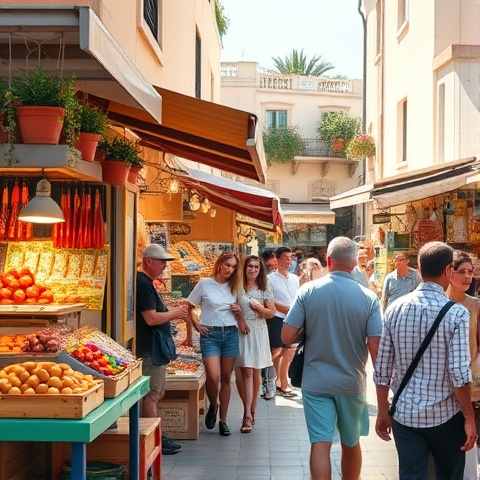
Local Market Lingo: Take It to the Streets Visiting a market in a town like Chania or Thessaloniki is a sensory overload in the best possible way. The smell of fresh oregano, the bright purple of the olives, and the shouting of vendors are glorious
-
Fréska (Fresh): Look for this when buying your fruit; it is all you need to know to get the best of the harvest.
-
Safōs (Of course): Use this to confirm your order when the vendor asks if you want more of those honey-soaked figs.
-
Échete kanéna kaláthi? (Do you have a basket?): Because you will definitely underestimate how many souvenirs you are going to buy. 1. Always greet the vendor with Kalimera before you start grabbing produce. 2. Ask for a sample—it is perfectly acceptable and expected. 3. Be prepared for them to try and feed you samples of everything in the shop.
Personal Experience: Learning the Fun Way On my first trip to Santorini, I was determined to sound like a local
I marched up to a fishmonger, puffing out my chest, and accidentally announced, "I would like to buy a sardine for tonight," when I clearly meant the whole catch of the day. The man looked at me, looked at the tiny fish in his hand, and burst into such a hearty, barrel-chested laugh that half the street turned to look. He didn't mind the error; he loved the effort. He ended up showing me how to grill the fish properly and gave me a free lemon for the trouble.
Practical Tips: Your Survival Guide Practice your pronunciation while you are in the shower; nobody is watching, and the acoustics are fantastic. Carry a small notebook if you must, but don't glue your eyes to it. Half the fun is the physical theatre of communication when words fail you
-
Remember that manners are paramount; parakaló (please) and efharistó (thank you) are your best friends.
-
Don't fear the 'nods'; watch how locals interact and mimic their ease.
-
Laugh at your own mistakes; it makes you infinitely more likeable than the person who is angry about a language barrier.
Final Thoughts So, there you have it: your cheat sheet for navigating Greece with a bit more soul and a lot less confusion. The goal is not to be fluent; the goal is to be present and to enjoy the beautiful absurdity of connecting with a culture so rich in history and hospitality. Embrace the chaos, use the phrases, drink the wine, and for heaven's sake, keep an eye on that cheeky goat—he is probably up to no good
?Frequently Asked Questions
Do I need to speak Greek fluently to enjoy my holiday in Greece?
Not at all! While stepping up your Greek game can make interactions lovely, many Greeks speak English, especially in tourist areas. Just knowing a few key phrases can make a world of difference!
Can I get by knowing only polite phrases?
Absolutely! Using polite phrases like please and thank you will earn you the locals' goodwill. Many will appreciate your efforts, and you might even get extra treats!
Are there specific phrases for festivals or local events?
Yes! Each region may have its own customs. If you are attending a local festival, try learning a phrase like 'Chronia Polla!', which means 'many years' or 'happy celebrations!'
How can I improve my Greek before I travel?
Consider listening to podcasts or watching Greek dramas. While apps help with vocabulary, hearing the cadence of the language is key to sounding authentic.
Are Greek gestures important?
Absolutely! Non-verbal communication is huge in Greece. A simple head tilt or wave can sometimes do more heavy lifting than an entire sentence.
Ultimate Greek Islands Itinerary
10 Days of Island-Hopping Perfection
The exact route I'd plan for my best friend — with ferry times, hidden beaches, and where locals actually eat.

